Showing posts with label Two For Tuesday. Show all posts

Tuesday, 20 October 2015

Macbeth / Bill (Two For Tuesday)

Better A Witty Fool


Speak to any person who has sat through high-school English and they can name at least one play written by William Shakespeare.  If you were like me, you would have also been shown some films adapted from his works, because English teachers are lazy sometimes.

No doubt the works of Shakespeare have been the backbone of British theatre since they were first performed more than 400 years ago and his name has become synonymous with tragedy, comedy and historical epics since then.  Even if there have been questions about the identity of their true author.

In the past few weeks, there have been two films released associated with William Shakespeare, an adaptation of his most feared and dramatic work, Macbeth, as well as Bill, a fictional biopic of Shakespeare's lost years made by the team behind the Horrible Histories TV show.

Now whilst these two films are both alike in background, they are very different in terms of theme, message and audience.  Whilst Macbeth is obviously for the drama lovers in the crowds, Bill is mainly aimed at children and those with their tongues firmly in their cheek.

Macbeth


For those unaware of the plot, Macbeth takes place in medieval feudal Scotland as King Duncan (David Thewlis) defends the crown from those wanting to take it from him.  Macbeth (Michael Fassbender) is one of Duncan's most trusted soldiers.

However, when Macbeth meets a set of witches that tell him he will one day be King of Scotland, he becomes obsessed with his supposed future and spurred on by his wife, Lady Macbeth (Marion Cotillard), sets about taking the throne for himself.

It's a story that has been adapted and performed countless times but this is the first time that I have seen the titular character portrayed as such an emotionally-damaged soldier.

In countless versions before this, Macbeth has either been an underhanded coward or just a simple puppet of his wife, Lady Macbeth.  However director Justin Kurzel portrays Macbeth as a devastated man before the witches even mention his royal potential.  He is shown as a grieving father and a man thoroughly affected by war, such an emotional state that the resulting paranoia and greed is understandable from such a frame of mind.


Michael Fassbender is perfect as the titular aspirational murderer, bringing raw anger to the battle scenes and a fevered madness to his slow and painful descent into hallucinating paranoia.  He is equally pitiful and yet despicable as he frantically holds onto the throne, which is a hard act to balance.

However it is not just Fassbender where the casting got it right, it is brilliant throughout.  The ever-reliable Paddy Considine is fantastic as Macbeth's general, Banquo, giving a more menacing silent performance than other characters just by providing unyielding intense stares or pregnant pauses.  Sean Harris is also an inspired choice for Macduff, bringing an intensity that is necessary for his mutinous treason against the villainous Macbeth.


But the plaudits for performances of Macbeth usually hang on those of the play's seminal character, Lady Macbeth, probably the strongest female character in fiction.  Marion Cotillard performs the role with such grace, poise and passion that I was surprised that her role is dramatically diminished compared to other versions I have seen in the past.

Lady Macbeth is known to be the driving force behind her husband's actions and the one who spurs him to commit the heinous deeds.  After their coronation, they both suffer from paranoid delusions and hallucinations but she is still resolute in her reasons and her pursuit of power never falters.

However Cotillard's Lady Macbeth hides behind her husband more than previous incarnations which disappointed me. Whilst her devious side is shown in the early scenes, I felt like that could have been emphasised in the latter scenes, but her performance was still fantastic.


Performances aside, the art direction is truly beautiful.  Towards the end of the film, after the surrounding forest is set alight, the amber hue that descends upon Macbeth's castle gives the final scenes an otherworldy quality that made me think I was watching painted backgrounds.

The sweeping shots of the Scottish Highlands set the scene perfectly, as they show how desolate and cold medieval Scotland would have been.  It also emphasises the pointless task that Macbeth embarks on, as it seems that they are quarrelling over the control of empty green fields and misty moors.

Filled with political ambition, murder and some fantastic performances, Macbeth is truly an emotional experience.  If you aren't a fan of the original Shakespearean version, the film's dialogue is not updated but that doesn't at all detract from the film.  It's a beautiful and brutal adaptation that's worth paying money for.
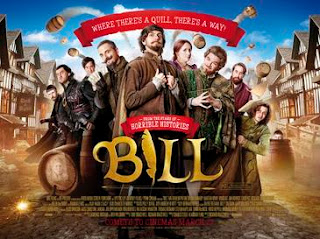
Bill


But enough about Macbeth!  What about the man who wrote it?  What happened during the years between William Shakespeare's time in Stratford-upon-Avon and him becoming famous in London?

Well the Horrible Histories team predict he had quite an exciting life!

Set during the troublesome time before England's war with Spain, the Spanish King Philip II plans to sneak into England and blow up Queen Elizabeth I.  But how can he do it?  Luckily, the hapless Earl of Crawley Croydon is planning on staging a play for the Queen, using the words of the new talent Bill Shakespeare as his own, and they are looking for actors.
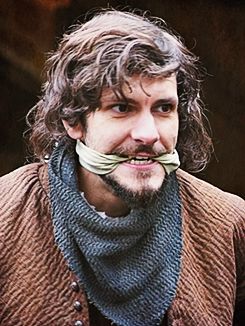
It sounds ludicrous and it is, especially compared to the plot of Macbeth mentioned earlier, but that's the great thing about Bill; it doesn't take itself seriously at all.  And it is all the better for it.

I can honestly say that this is the most I have laughed during a film probably all year.  The script's wit is irreverently British, the slapstick is childish but not annoyingly so, and the puns are so amazingly awful (but in a good way...)

I've never watched the Horrible Histories TV show but my friends with children tell me that it is one of their favourite shows to watch with their kids, as there is enough entertainment for both of them.  The kids get to learn about the time period and the events that happened, and the humour is still intelligent for the adults to get a kick out of it. When I went to see the film, there were more adults in the screening than children and they were all laughing out loud.

I would highly recommend both of these films, obviously for different reasons.  If you are wanting a visceral epic filled with political ambition, set in the Scottish wilderness, Macbeth is a great option.
But if you just want a film that is a good laugh, filled with British wit, sarcasm and one that kids can enjoy as well, Bill is a fantastic choice.  I truly hope that this isn't the only film to come from these gifted talents.


Until next time folks, thanks for reading!

If you enjoyed what you read, 
'Like' me on Facebook at www.facebook.com/pages/Mike-Dunn-Reviews 
or 'Follow' me on Twitter at www.twitter.com/MikeDunnReviews

Tuesday, 1 September 2015

Inside Out / Song Of The Sea (Two For Tuesday)

A Bittersweet Symphony


Over the past few weeks, I've been a bit backlogged with certain personal situations, so I haven't been able to keep up with some of the more current releases.

However, there are two films which I made special effort to go and watch; the Irish animation Song of the Sea and Disney/Pixar's Inside Out.

I have since watched both of them three times each.

It's no real shock for a film critic to desire to see the newest Pixar film, as their backlog of films more than speaks for itself in terms of quality.  However, I had heard so many fantastic things about Song of The Sea, I felt like I had to try and catch it before it disappeared.

Surprisingly, they share a number of similarities.  Not just in the quality of their respective animation, but the depth of their scripts, the use of music, and the array of memorable characters and unique worlds that deserve to be featured up there amongst the greats of animation.


Song of the Sea begins with a young boy, Ben, in 1980s Ireland.  After his mother mysteriously leaves him and his father with a newly-born girl, Saoirse (pronounced 'Sher-sha'), Ben grows to resent Saoirse, blaming her for his mother's disappearance and is bewildered why Saoirse has yet to utter a single word in the six years since that night.  However Ben doesn't realise that Saoirse is a 'selkie', a human capable of transforming into a seal, who needs to sing The Song Of The Sea so all faeries can return to their home.

Yeah, this is proper fantasy stuff we're talking about.  Yet it is fully grounded in mid-80s Dublin, with most of the humour coming from when the two worlds collide.  One of the most humorous scenes features ancient faeries, clad in rain macs and leaf moustaches, running from owls whilst crossing busy roads to get to their home on a roundabout.  That kind of stuff.  So utterly charming and whimsical.  And it's all the better for it.


Outside of the fantastical elements of the story, the heart of the film comes from Ben and Saoirse as they travel from their Granny's house back to their own lighthouse home.  Over the course of their journey, Ben learns to become the big brother Saoirse has needed whilst growing up, and their back and forth is undoubtedly familiar to anyone with a brother or sister.  Not just the siblings, but every person in this film is given the most subtle of characterisation, making you feel like you know them the instant they appear on screen.

The film's animation is painstakingly created in a craft paper artistic style, and it feels as if this story couldn't have been told any other way, since it seems to have come straight from a child's fairytale book.  The film's earthy and grounded tones helps balance the realistic tone with the fantastical elements and certainly adds to the ancient Irish folklore from which it comes.


I must give a special mention to the film's soundtrack, written and orchestrated by Bruno Coulais (whose previous work can be heard in Henry Selick's Coraline).  Lisa Hannigan's beautifully haunting vocals provide a mystical quality from the very beginning, adding to the film's ethereal magic.  I made sure I went out straight after watching it and bought the soundtrack as soon as possible.

Song of the Sea was nominated for Best Animated Feature this year at the 87th Academy Awards, losing out to Big Hero 6, and I believe the Academy made a huge mistake.  Nothing against Disney or Big Hero 6, but Song of the Sea is one of the most charming, lovely and heartfelt films I have watched in a long time.  The story has a timeless quality to it, bringing the mythical and ancient folk tales and setting them within modern times to a fantastic result.


Speaking of Best Animated Feature, no doubt a favourite for it this year, if not Best Picture, is Pixar's latest gem Inside Out.

Set within the mind of eleven year old Riley Andersen, who is uprooted from her Midwest life when her father starts a new job in San Francisco. Like all of us, Riley is guided by her emotions: Joy (Amy Poehler), Fear (Bill Hader), Anger (Lewis Black), Disgust (Mindy Kaling) and Sadness (Phyllis Smith). The emotions live in Headquarters, the control centre inside Riley’s mind, where they help advise her through everyday life.  As Riley and her emotions struggle to adjust to a new life in San Francisco, turmoil ensues in Headquarters. Although Joy, Riley’s main and most important emotion, tries to keep things positive, the emotions conflict on how best to navigate a new city, house and school.

Since Toy Story 3 back in 2010, Pixar have been through an uncharacteristic 'slump'; Cars 2, Brave and Monsters University were fun in places but generally failed to blow anyone away, which is usually Pixar's bread and butter.  However, with Inside Out, the phrase 'return-to-form' is an understatement.


Firstly, whilst the premise is essentially The Numbskulls (shoutout to all you Beano fans out there!), the writer-director Peter Docter (of Monsters Inc. and Up) utilises the setting of the film to it's highest ability and creates a truly inspired and imaginative masterpiece. 

The broad scale of how varied and colourful Riley's mind is truly mind-boggling.  Through unfortunate events, Joy and Sadness get an unexpected tour through Riley's brain, from where her long-term memories are stored, to where her imagination creates French Frie Forest, dancing rainbow unicorns as well as boyfriends that live in Canada and would die for her.


Whilst the script is hilarious and charming in its scope of explaining certain mental phenomenon (Riley's train of thought is an actual train, dreams are produced in Hollywood-style movie studios etc.), the film also tackles complicated feelings but in a way that is incredibly understandable. The entire plot is centred around Joy and the other emotions figuring out the importance of Sadness in Riley's life. Not a light concept and yet Inside Out makes it seem so simple.

Similar to how Up dealt with emotional loss and Toy Story 3 dealt with moving on with your life once being replaced, both Song of the Sea and Inside Out tackle the issues of maturity and the importance of family, but break it down to a level that even young children can understand.

Not only will Inside Out appeal to kids in the audience with their bright colours and silly characters, but it will appeal to them through the relatable experiences that Riley goes through.   The twenty-somethings that have grown up with Pixar's charm and magic filling their childhoods will fall right back into the groove. The adults will again be shown into the hidden world of how kids actually think and the problems they go through.

That's the extra mile that you get with Pixar films; they feel as if every aspect has been slaved over and perfected, leaving you with just a wonderful film.  I can't recommend both of these films enough. They truly are fantastic for all the family and will touch your heartstrings as well as your funny bones.


Until next time folks, thanks for reading!

If you enjoyed what you read, 
'Like' me on Facebook at www.facebook.com/pages/Mike-Dunn-Reviews 
or 'Follow' me on Twitter at www.twitter.com/MikeDunnReviews

Tuesday, 16 December 2014

Two For Tuesday: Under The Skin / Captain America: The Winter Soldier

Next on my 12 Days of Christmas, my Number 11 and Number 10 favourite film this year, and wouldn't you know it, they both star Ms Scarlett Johansson!  No, this is not an excuse to get her beautiful face on my page... but I'm going to anyway...


Ahh that's better.

Whilst one film is a Hollywood blockbuster from the Marvel building-block franchise, the other is a small, independent art film about aliens killing Celtic supporters in Scotland.  Let's start with the former.

#11 - Captain America: The Winter Soldier


I wasn't the biggest fan of the first Captain America film that was released back in 2011.  At all.  The First Avenger told the origins of Steve Rogers, a weedy, yet earnest young man who was deemed unsuitable for the American army during the Second World War.  He came across as a lovable loser-turned-superhero, but the film on a whole just rubbed me the wrong way.

Maybe because I'm a die-hard British patriot and I didn't care for the typical American view of the Second World War being all but fruitless without the saviour coming from across the pond.  Either way, when The Avengers (Avengers Assemble to us Brits) was released a year later, I was very excited to see how Iron Man, Thor and Hulk coped but was drastically less interested in the Captain.  Yeah, his shield reflects things, he's strong and fast... and ... he's a good war strategist... I guess?  But other than that, I had no idea why he was on this team of misfit heroes.  It was nothing against Chris Evans, the man portraying Steve Rogers.  He's a fantastic actor who played the role very earnestly and gives 110% in all of his roles (particularly Scott Pilgrim vs. The World).  Something was just lacking in this one Avengers prequel.

Three years later and it's sequel time!  Taking place after The Avengers' Battle of New York, Rogers is still working for Nick Fury and the S.H.I.E.L.D. spy agency, all whilst adjusting to contemporary society.  However after investigating into some shady operations, Rogers, Fury (Samuel L. Jackson) and Black Widow (Scarlett Johansson) are branded as enemies of the state and must fight their own colleagues to stay alive.

Shrouded in political mystery, The Winter Soldier manages to outdo nearly all of the previous Marvel films in it's quality by finally making the transition from simple comic-book fare to an all-out conspiracy thriller.  More impressively, for the first time, the film made me sympathise with Steve Rogers as a man-out-of-time who just wants to transfer the camaraderie of his army days into today's secular "Don't Trust Anyone" society.  The characters of Black Widow and Nick Fury are just as preposterous as ever, but their so-far secretive back stories are finally touched upon and partially revealed to finally give them a bit more fleshing out, rather than "They're just super-spies...".  The funny thing about this film is that the titular Winter Soldier barely features in the film, and yet you are more-than-adequately served a healthy dose of narrative, filled with suspense and intrigue throughout.  No one is truly what they seem and it gives the film a fantastic edge, similar to the Mandarin-twist of Iron Man 3.


Don't get me wrong, there are plenty of things wrong with some of the plot contrivances, (Nick Fury cutting himself out of a car whilst it's upside-down is one such example) but you forgive the film for still being the disbelief-suspending film it is at heart.  Despite it's standard of ratcheting up the action, the action scenes are incredibly choreographed whilst the pacing is constant, yet not overwhelming. Whilst Fury, Black Widow and the new character of The Falcon (Anthony Mackie) are fleshed out appropriately, there are other characters that don't get their due, such as the undercover Agent 13 (Emily VanCamp) and S.H.I.E.L.D. director Alexander Pierce (Robert Redford).  I imagine these roles will be increased in future Captain America films but it just gives a tiny feeling of dissatisfaction. However, this is a tiny gripe.

In any case, bravo Captain America: The Winter Soldier.  You managed to turn this Captain America doubter into a full supporter.  Now that the flag-waving, Nazi-puncher has been replaced with a genuinely interesting and troubled character (which still cannot be said of Henry Cavill's Superman), the only weak link in the Marvel chain has been fixed.  I highly recommend this film to those of you out there who aren't just looking for a superhero film, but an interesting commentary on today's paranoid society.  Also to those haters of The First Avenger.  It might just surprise you, as it did me.

#10 - Under The Skin


Similar to The Winter Soldier, I approached Under The Skin with some trepidation.  I had heard some details of the plot and it's filming style and I was a tad nervous.

The plot follows Scarlett Johansson as a nameless woman, who is actually an alien in human form.  We follow her travelling around Glasgow picking up lonely men for some alien reason.  However the nameless woman starts to begin to question her actions and the usefulness of her human body.  The film is wholly from the alien's perspective and is an outsider's view on the human species.

I normally hate films such as Under The Skin.  The phrase 'style over substance' usually gets thrown around with 'artistic' films like this.  However, the film just blew me away.  It is disturbing, and yet beautiful.  It is haunting, and yet poetic.  It is fantastic, and yet arty.

The main praise is laid definitely at Scarlett Johansson's feet.  Similarly to The Winter Soldier, her role in Under The Skin is openly intended as sexual appeal as she plays an alien intended on being attractive to the men of Glasgow, so that they can harvest their bodies.  What for?  We're never told, although their methods are as disturbing as they are mesmerising.  However as she starts to relate to the humans she is luring into traps, she begins to question her role and starts making mistakes in her kidnapping attempts.  She displays the innocence of a child, all in a eerily hollow and yet curious way.

The film interestingly delves into how we treat each other as people, from an outsider's perspective. Admittedly it does it at a slow pace, sometimes leaving me wondering where the plot was going. However that is not where the beauty lies.  Whilst style over substance may be argued, I believe that the style is the substance and the other-worldly aspects of the film bolster the film's atmosphere and alien point-of-view.  The beautiful shots of the Scottish countryside and the Highlands, as well as some of the most realistic and documentary-like shots of British culture add to the realism of the situation, as well as ground some of the lofty sci-fi aspects of the script.

I went into both films expecting the worst, and both films definitely managed to subvert my expectations.  The Winter Soldier provided social commentary as well as a action-packed conspiracy thriller, and whilst Under The Skin  featured no car chases or explosions, I was hooked throughout. However I'd say the former is better with a bucket of popcorn.


Tomorrow?  My 9th favourite film of 2014!  Be sure to check it out!

Until next time folks, thanks for reading!

If you enjoyed what you read and you'd like to be kept more up to date with my posts, I can be found on Facebook at https://www.facebook.com/pages/Mike-Dunn-Reviews and on Twitter at https://twitter.com/MikeDunnReviews - if you want to help the site grow, give them a 'Like' or a 'Share'!

Tuesday, 28 January 2014

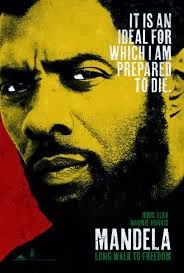
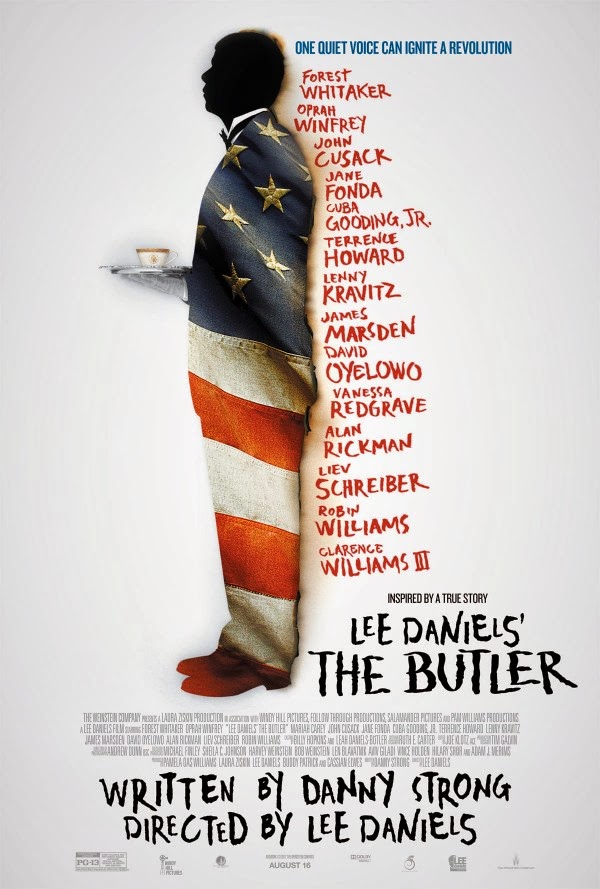
Two For Tuesday: Mandela: A Long Walk To Freedom / The Butler

FREEDOM WRITERS

The world has been in a state of mourning recently at the tragic, yet ultimately predicted, death of Nelson Mandela, a key inspirational and controversial figure in the apartheid struggles of 20th century South Africa.  Coincidentally, a recent biopic of the famous freedom-fighter was made just before his death, and it's release has since been rescheduled and previewed early, most likely to cash in and take advantage of grieving cinema audiences.

I was in one of those early-previewed audiences, filled with people wearing rose-tinted glasses about the man they thought only as a 'kindly grandpa' figure, sporting tufts of white hair, often wearing pyjamas and meeting Prince Charles and the Spice Girls back in the late 1990's.  I was treated to gasps of shock and horror as the people around me learnt what violent acts that sweet old man had endured and carried out during his rise to power.  A lesson was certainly learnt in the auditorium that night, if only the art of the timely cinematic release date.

Mandela: A Long Walk To Freedom recounts the major events in the life of Nelson Rolihlahla Mandela, a man born within the Xhosa tribe of South Africa.  As he begins his adult life as a lawyer defending the abused and mistreated black citizens of South Africa, Mandela joins a freedom-fighting 'terrorist' movement, leading to his eventual incarceration and *SPOILER ALERT* election to become the country's first black President.  

Idris Elba delivers an incredibly powerful performance as Mandela and this is entirely his film.  His power and pathos draws the audience's attention and won't let it go no matter what.  Elba's South African accent may waiver at some times but you forgive it as you entirely lost in the other facets of his performance.  Naomie Harris also performs admirably as the tortured soul of Winnie Mandela, but it will be Elba that is remembered for this film.

In attempting to recreate most of Mandela's major life events, and twinning the events with the background of racial segregation and apartheid, Long Walk To Freedom draws some parallels with Lee Daniels' recent pseudo-biopic The Butler.  The Butler is a curious film as it depicts events during the race riots and freedom demonstrations of 1960s America, yet shows how it affects a fictional character, the titular butler Cecil Gaines

Gaines is based upon Eugene Allen, the real-life butler who served inside The White House under several different American Presidents, such as Carter, Reagan and Nixon.  What I, as a viewer, did not understand was why did you create this character of Cecil Gaines' instead of using the real life inspiration for him, Eugene Allen?  

During the anti-segregation demonstrations, Gaines' son meets the infamous freedom-fighters Malcolm X and Martin Luther King Jr. and stages rallies with them and risks his own life for his beliefs.  Yet we know this man we have become accustomed never really met these people and didn't exist.  Therefore are the situations we see him endure fictionalised too?  Did Malcolm X really torture his own followers to prepare them for the hardships ahead?  Were The Black Panthers that violent in their behaviour?  Did Oprah Winfrey really sleep around?

Both films attempt to feature many key points in the history of black oppression, but Mandela handles it in a much more understandable way.  Whilst the film tries to fit in as many milestones in Mandela's life as physically possible, they are properly explained with context and are allowed to breathe.  This can't be said about The Butler, which just throws scene after scene at you, with various famous actors portraying famous politicians (Cusack as Nixon, Rickman as Reagan etc.) and none of it is allowed to sink in to the audience's understanding.  Mandela also treats their shared subject matter of the history racial tension with a certain brutality and frankness that was refreshing after watching The Butler's sporadic protest montages.  These montages of the first Black American students taking a stand against the segregation do leave an impact, as they do depict horrible torturous scenes, but they are only a fleeting backstory instead of being at the forefront, like Mandela's.

Don't get me wrong, you will get a history lesson from both of these films, and rightfully so, as the message is one that needs to be remembered.  However, I would rather my lesson be taught by such a powerful and determined individual that my attention is stuck on the screen, than someone who makes me question their own research.

Does that metaphor work?  Perhaps not.  Screw it; go see Mandela, leave The Butler on the shelf.

FLAWLESS VICTORY
Until next time folks, thanks for reading!

If you enjoyed what you read and you'd like to be kept more up to date with my posts, I can be found on Facebook at https://www.facebook.com/pages/Mike-Dunn-Reviews and on Twitter at https://twitter.com/MikeDunnReviews - if you want to help the site grow, give them a 'Like' or a 'Share'!

Tuesday, 3 December 2013

Two For Tuesday: Rush / Thor: The Dark World


THORMULA ONE

For Odin's sake!
Do you even OWN a shirt?
Women of the world; rejoice! As today’s Two For Tuesday focuses on two recent films starring the relatively new Australian actor, Chris Hemsworth.  Both he and his younger brother Liam have been recently setting America alight with their powerful leading-man performances, quite public break-ups, but most importantly, their chiselled pectorals and jawlines.  Whilst Liam has starred in some mediocre films such as The Hunger Games, and as well as being known as Miley Cyrus’ other half, Chris has shot to higher notoriety. Through his starring roles in films such as Cabin in the Woods, Snow White and the Huntsman and The Avengers, the older Hemsworth has become somewhat of a household name, especially in mine, as my girlfriend insists on hanging the Chris Hemsworth calendar up in our flat.

But recently, Chris has appeared in two box-office smashes, Rush, the semi-biopic of Formula One drivers James Hunt and Niki Lauda, and the Marvel Universe sequel Thor: The Dark World.  Both feature high-adrenaline set pieces, emotional turmoil for our heroes, and ultimately, hunky Chris being out-acted by a more accomplished actor.  But we’ll get to that in a bit.

Released back in August, Rush follows the paths of two Formula One drivers, the British playboy James Hunt and the level-headed and meticulous Austrian, Niki Lauda.

It was the blondest of weddings
Whilst these two drivers are complete opposites off the track, when they race, they both strive for victory no matter the risk to their own lives.  The film shows us both racers rise from the lower levels of Formula 3 all the way to the big leagues of F1 Grand Prix racing as well as their different methods, lifestyles and approaches to the sport. Whilst Hunt drinks away his days with a different girl every night, Lauda spends his time analysing his vehicle, trying to find better ways of improving his performance. This difference in lifestyles fuels a rivalry that lasts over many Grand Prix courses and both men must live with the horrendous consequences of their choices.

Much like Apollo 13, Frost/Nixon and A Beautiful Mind before it, Ron Howard has managed to take this true story and utilise the possibilities of a big screen adaptation to it's full potential.  The entire idea behind Hunt and Lauda's rivalry is that this pissing-contest took place at speeds of over 150mph.  That is simultaneously an incredibly impressive and stupidly dangerous way to make a living.  It's no wonder that Hunt is always shown numbing the impending danger with alcohol and Lauda is a nervous wreck that has no time to enjoy his life when they choose such a life-threatening profession.  Consequently, the film is just a thrill-ride from beginning to end.  This is mainly due to Howard's incredible direction, Anthony Mantle's kinetic and invasive cinematography as well as the haunting score of Hans Zimmer's, which is often unfortunately drowned out by the revving of engines.

Hemsworth offers a decent performance as the carefree rogue James Hunt, worryingly almost coming to the point of a caricature, but the native Australian displays enough gravitas and gives such an earnest portrayal that it is able to ground him and make him seem three-dimensional.
However, the plaudits all go to the German actor Daniel Brühl who portrays Niki “The Rat” Lauda. Brühl will be known to most from Tarantino's WWII epic Inglorious Basterds but he has most recently been starring opposite Benedict Cumberbatch in The Fifth Estate, and is hopefully going to be nominated at this Academy Awards for his performance in Rush.  Brühl physically transforms himself into this highly-strung, fastidious perfectionist with seemingly effortless ease and is a perfect foil to the happy-go-lucky Hunt.  Their partnership and rivalry really moves the film along at an appropriately brisk pace, and their showdown races at the German and Japanese Grands Prix are just mesmerising. (Bet you didn't know that was the plural of 'Grand Prix' did ya?)

Even if you hated the film, you have to applaud the casting
From the racetracks of Germany and Japan, comes the realms of Nibelheim and Asgard, where most of Thor: The Dark World takes place. Again, Chris Hemsworth plays the dashing and lovable rogue character, the titular God of Thunder and two years have passed since the events of the first Thor film and the superhero collaboration/cash-cow The Avengers. The Asgardian prince has been charged with bringing peace to the Nine Realms, whilst his love interest Jane (Natalie Portman) has been searching for more scientific clues to the other realms, as well as Thor's return.  However, an ancient evil is awoken, and with it comes the return of the Dark Elves, who's main goal is to extinguish all light in the Universe. And Thor can't be having that.

Nice mask...That's cool...
I wasn't planning on sleeping tonight anyway...
I was really taken with the first Thor; it didn't try and be cool and cocky like it's brother-film Iron Man, or dark and brooding like The Incredible Hulk. It knew it was camp and it didn't try and hide it. It wore it's twiddled moustaches and gigantic magical hammers on it's sleeve and I admired that. Also it had a fantastic dastardly villain in Thor's mischievous brother Loki (Tom Hiddleston) who sometimes provides a larger impression on the film than the main hero.

Hemsworth seems such perfect casting for the God of Thunder. With his long-flowing locks, chiseled features and elegant Aussie-turned-British accent, it's no wonder that it's not just guys who were queueing up to watch the worldwide midnight screenings! Tom Hiddleston's Loki seems to also be attracting his own share of followers recently. His natural charisma is so intoxicating and you can't but smile every time he wryly criticises his adoptive brother driving skills and their inevitable bickering when in the cockpit of an alien spacecraft.  His inclusion in this film manages to bring every aspect together and he is such a valuable asset to the film.

Don't worry guys,
we get some eye-candy too...
There are few new characters that didn't star in the previous film, with familiar faces like Darcy (Kat Dennings) and Heimdal (Idris Elba) reprising their roles, however former Doctor Who Christopher Eccleston stars as the villain, the Dark Elf, Malekith The Accursed (or just Malekith to his pals).  Now I'm usually a fan of Ecclestons, having being blown away by him in both Danny Boyle films Shallow Grave and 28 Days Later, but I feel like his acting capabilities are hindered by the extensive make-up he finds himself under and the fact that he hardly speaks English, preferring the Elvish language that is dutifully subtitled. Along with the lack of understanding, there was a certain lack of malice from his character.  Yes, he wants to bring the Universe back to pure darkness, but it is never mentioned why or how he intends to create this mischief.  It just leaves the story without a memorable or imposing villain and that is a true shame.

However like I previously mentioned, hardly anything has changed from the first Thor film.  Enough of the gripping tension and visually stunning fight scenes are interspersed with very funny comedic moments, such as Thor taking a trip of the London Underground, so it keeps an even balance throughout.  The film is hardly a game-changer, but an incredibly fun watch.  And even if the Norse mythology bores you, Thor gets his shirt off a few times.  I knew that'd win you over.

Rush - 8.5/10
Thor: The Dark World - 8/10

And just to finish on...

Tuesday, 29 October 2013

Two For Tuesday - Trance / Filth

Filthy Trancing


The man can have one-man staring contests for hours...
Back in 2006 the British Academy of Film and Television Arts, otherwise known as BAFTA, rightfully voted for a young Scottish actor to win the Rising Star Award for his roles in films such as the Oscar-winning The Last King Of Scotland and Atonement, not to mention his vital and applauded role of Mr. Tumnus in The Chronicles of Narnia: The Lion, The Witch and The Wardrobe.  He beat several impressive up-and-comers such as future Academy Award winner Michelle Williams, as well as the incredibly talented, but often miscast, Gael Garcia Bernal. That young Scot was one James McAvoy and he has just gone from strength to strength after being awarded this fan-chosen honour.  Aside from various voice-acting, he has since starred alongside Angelina Jolie in Wanted, portrayed a young Charles Xavier in X-Men: First Class and given an impressive performance in a subpar film, Welcome To The Punch.  And now in the past few months, McAvoy has been very busy indeed, starring in both head-scratching dramas Trance and Filth.

Both Trance and Filth have received wide critical acclaim upon release but unfortunately they only featured in the heights of the UK box office for more than a few weeks.   Their short lifespan could come down to a number of factors, but one reason for their critical acclaim surely is the acting talents of that one risen star James McAvoy.   His natural charisma and charm simply ooze off the screen as he portrays unreliable narrators in both films, as well as providing a steady groundwork upon which both stories may build.  Whilst you might not trust his characters, you feel comfortable in his ability to entertain, even when acting despicably or dishonestly and that is a rare trait for an actor.

Released back in March, Trance sees McAvoy play an auction house employee caught up and implicated in the theft of a priceless piece of artwork.  His head is struck during the attempted heist and he cannot recall where he hid the painting from the robbers.   Obviously, this irritates the robbery's mastermind (Vincent Cassell) and he contacts a hypno-therapist (Rosario Dawson) in an attempt to retrieve the memory from McAvoy's damaged mind.  As they delve deeper into McAvoy's mind, they discover that there is more hidden within than just the painting's location.

On overview, this could be the most intricate and confusing film I have seen in the cinema since Christopher Nolan decided to generously reward us with Inception back in 2010.  There are a lot of comparisons to make to Inception; mainly being that I was left open-mouthed by many of the film's twists and turns and it will definitely require a second viewing.  Danny Boyle hasn't been afraid of being bold in his directorial career, made evident from his early films, such as Ewan McGregor's incredibly disturbing cold-turkey ordeals in Trainspotting (baby on ceilings, anyone?) all the way to those he has directed recently, with James Franco's personal dismemberment in 127 Hours certainly leaving a lasting impression.  Just thinking of Franco reaching his left arm's main nerve makes my skin crawl to this day.  And in it's own way, Trance isn't afraid of taking bold steps in it's narrative.  Timelines are turned askew, allegiances are formed, then broken and not everyone is who they seem.

I honestly did not know what to expect going into Trance and can safely say that I still have no idea what I truly watched.   All I know is that I was happily blown away; not only by the mind-bending culmination but nearly every scene preceding it. A large part of that reaction would be due to the varied performance of Mr McAvoy.  He shows such a dramatic and impressive range of emotion in Trance, he seems to embody approximately seven different characters and all in the same person.  Danny Boyle manages to treat us to a cavalcade of red herrings, teasing foreshadowings and subtle hints to the film's true meaning.  Upon discovery, you will instantly want to watch the film again to appreciate it in a whole new light.

Speaking of a whole new light, not since Nicolas Cage's insane, scenery-chewing performance in Bad Lieutenant have I seen a more destitute, despicable and damaged character in film than Filth's Bruce Robertson (McAvoy).  He is a manipulating, molesting, bigoted, homophobic, misogynistic horror of a man, but all McAvoy has to do is flash his cheeky grin and you can't help but be reluctantly mesmerised as he terrorises his way through the Edinburgh streets.


Filth is adapted from the Irvine Welsh novel of the same name, and like Welsh's previous work, Trainspotting, Filth focusses on the depravity and turmoil of one particular Scottish man.   Instead of McGregor's Renton, we are introduced to Bruce, a Detective Sergeant in the Edinburgh police who is desperately vying for the coveted Detective Inspector position that is up for grabs.  In order to achieve his goal, Bruce is willing to toy with the emotions and dreams of his colleagues, plotting against them all whilst indulging in drugs, alcohol and sexually-abusvie relationships.  Described by McAvoy as “Blackadder, but without Richard Curtis”, it really isn't a first-date film but is still sincerely breathtaking in the depths that it sinks.

The word 'overdose' comes to mind...
Whilst Bruce is truly a loathsome character, he is supported by a fantastic cast, particularly Eddie Marsen who continues his fine form as the timid Clifford Blades and Jim Broadbent who appears in Bruce's imagination as a twisted surreal version of his real-life psychiatrist.  I haven't read the book from which Filth is adapted, but when I have discussed it with friends, they have nothing but praise for the novel and highlighted the surreal dreams sequences in which the psychiatrist features.  These were truly shocking moments during the film as they are drastically different from the normal gritty reality that Bruce encounters during his mental breakdown.  He also begins imagining his friends having grotesque animal heads instead of their regular faces and those images with stay with me for a long time...

Overall I feel that these are films that are quite difficult to understand and endure, but can be appreciated regardless throughout. Like someone telling you a really complicated mathematical problem, showing you how they solved it and then watching them smash a watermelon right in front of your face; you don't quite know what you've seen or how much you understood, but gosh, what an interesting experience!

That analogy might not quite work, since it's nearing midnight and I'm beginning to struggle, but the main linchpin of both films is that man McAvoy.  His charm and his talent transfix your eyes to the screen throughout both films, despite the vulgar, confusing or depraved actions taking place and that is a rare talent in actors today.  He will soon be seen in the upcoming X-Men film, Days of Future Past (which I honestly cannot wait for) but I'm certain that an Academy Award will come soon for this wee lad from Port Glasgow.

Ratings:
Trance – 9/10

Filth – 8/10

Thank you for reading and I'll see you all soon! x


Tuesday, 23 July 2013

Two For Tuesday - This Is The End / The World's End


The End is Nighy

In a recent review, I commented on how Hollywood sometimes replicates certain film premises, and sometimes even whole plots. Earlier this year we had the post-apocalyptic films After Earth and Oblivion, and in the past few weeks, two films dealing with the actual apocalypse have been released; This Is The End and The World's End.  See the similar names?  That's the give-away. Whilst one comes from America and the other Britain, they are both filled with famous comedy actors, laugh-out-loud moments and the end of civilisation as we know it.  However, their methods of telling these apocalyptic tales differ greatly.

The Rapture of Los Angeles...
not just these three people...
This Is The End was released back in June and centred on how a group of A-list comedy actors such as Seth Rogen, James Franco, Emma Watson and Michael Cera cope with the end of the world. Since the word 'apocalypse' has been thrown around in such a blasé fashion these days, I feel I must differentiate between the types of apocalypse that these two films depict.  This Is The End features a Biblical Rapture-style apocalypse, where the morally-righteous people ascend up to Heaven and the morally-bankrupt are left to suffer demons and hellfire.  The group of Hollywood actors, all attending a party at James Franco's house, are pretty much the only people remaining after the Rapture and that in itself is quite a humorous idea. As Seth Rogen and co-star Jay Baruchel run down the chaotic, yet desolate streets of post-Rapture Los Angeles, they arrive at James Franco's house, where not a single Hollywood A-lister has been deemed worthy to enter Heaven. I don't know what hell-worthy things Emma Watson has done, but Hermione is stuck on Earth with the rest of them.

English girls don't do well in LA...
The trailer for This Is The End seemed to focus purely on how unprepared these actors were for such an event, shirking responsibility when having to venture for supplies, improperly barricading the house and childishly fighting over a solitary Milky Bar chocolate, and that's the film I wanted to see. With the actors playing twisted versions of themselves, Michael Cera especially, I wanted a biting, satirical look into Hollywood actors are incredibly pampered and ultimately clueless. To it's credit, it does start poking fun at the idea of self-centred celebrities, Jonah Hill in particular referring to himself as “Jonah Hill... from Moneyball” when praying, and thinking that celebrities such as himself and George Clooney will be the first to be rescued in an emergency such as theirs, but it never delves too far. It slowly stops being an acerbic look into fame and starts becoming the stoner-comedies for which the main stars are known.

Don't get me wrong, there are quite a lot of funny gags in the film, mainly during the promising opening act, with Michael Cera's hideous caricature getting the main laughs, but the film failed to live up to the beginning set-up, becoming more and more silly and disappointing as the film went on, culminating in such a ludicrous and audience-pleasing finale, I cringed all the way through it.

That disappointment only increased my expectations for the finale to Simon Pegg, Nick Frost and Edgar Wright's Blood and Ice Cream trilogy, The World's End, released this week.

One of my favourite trilogies of all time,
even though it's a technically 'unofficial' trilogy
Simon Pegg plays Gary King, the once-leader of a lovable and aspirational gang of five lads growing up in a sleepy Southern town. He yearns to relive the night from his past that topped all others; when the five lads left high school and failed to conquer the Golden Mile, a pub crawl consisting of all twelve village pubs. Gary reunites the old friends to try and complete the Mile, despite how successful and distant the four friends have become. Along their crawl, they discover not all is what it was in Newton Haven. People seem cold and robotic, as if they've been replaced...
Always dressed for the occasion...

The World's End carries on the tradition set out in Shaun of the Dead and Hot Fuzz, by balancing very ordinary people and very extraordinary circumstances; this time, an alien invasion apocalypse. Pegg and Wright stated that since Shaun had been their horror film and Fuzz was their action film, they wanted to complete the trilogy with TWE being their science-fiction adventure. They delivered. 

As usual, the film is completely filled with visual references to the genre it belongs to, whilst adding a fresh and innovative flair to the standards set by classic science-fiction before it. Wright's direction has impressively matured from the experimental style of Spaced, the TV series where he first worked with Pegg and Frost, and he has now been able to combine subtlety and excitement into incredible fluid camera movements, especially in madcap fight scenes that reminded me of his previous film, Scott Pilgrim vs. The World.

They had to do countless re-takes
for some reason...
The main double-act of Pegg and Frost are fantastic throughout the film, as well as the other three reunited group members (Martin Freeman, Eddie Marsan, Paddy Considine) and the cameo from ever-present Bill Nighy.  But seeing the dynamic shift between the two main leads was very interesting to see from a fan's perspective.  In Shaun and Fuzz, Pegg played the straight-man who coped with his partner Frost, epitomising the loafish idiot.  However Pegg's character Gary King defines wasted youth.  Obviously having drunk and smoked most of his life away, his obsession with reliving his past and capturing the glory days is initially endearing, but ultimately devastating to see how such promise has deteriorated to King's current state. Pegg's ability to make King so annoying and yet so lovable is wonderful to experience. He has the innocence of the Andrex puppy, mainly due to having the same IQ.  Yet the frustration felt by the four returning men can be so easily understood.  The film is all about the friendship between the five of them, not the apocalypse that happens in the background.

That's what defines The World's End and the ultimate difference between the two films; The World's End contains a heartfelt and touching storyline, rather than This Is The End; an interesting premise that is stretched out until it becomes boring. The dynamic between the two leads is an essential element to the film that helps keep you interested throughout, and was much more believable than Seth and Jay's relationship from This Is The End. The A-listers grow apart due to fame becoming a divider, rather than Gary King's self-destruction, a much more relatable problem.

I could go on for a while about how The World's End is intricately designed and obviously filled with care and love by a true auteur director, but it'd be much easier to watch it yourselves. It's a film that can be watched on multiple occasions and you can take away different aspects every single time. This Is The End is a fun laugh for a night where you just want to switch off and have a silly time, but The World's End is, by far, the better option. They manage to combine the topics of alienation, misspent youth, “Starbucking”, freedom, indoctrination, loss of identity and school discos all into one pub crawl.   I'll drink to that.

This Is The End – 5
The World's End – 9